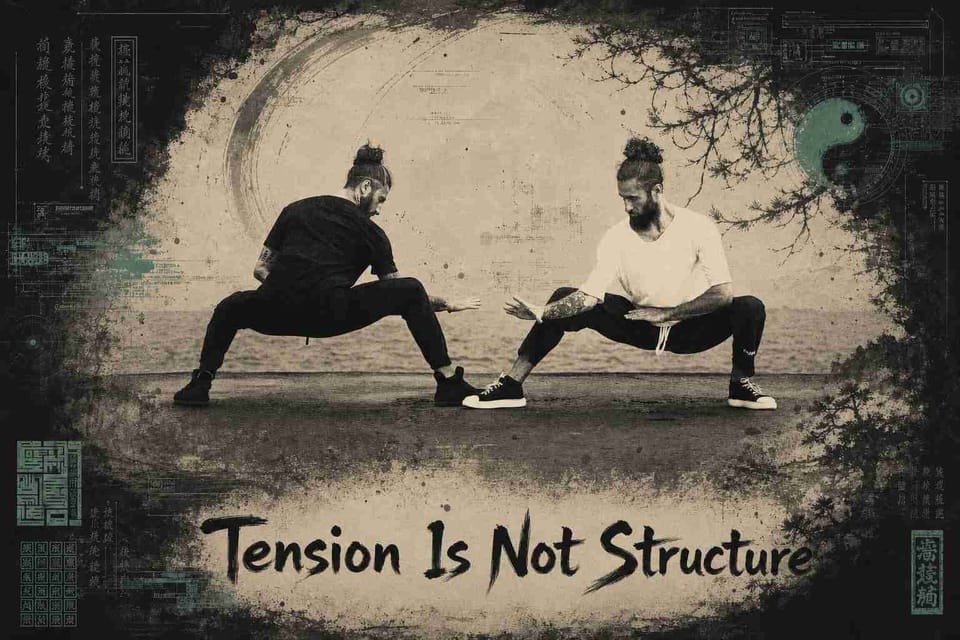
Tension Is Not Structure
Structure Comes Before Strength
A standing pillar is more than simply holding a posture. It is a method of building an integrated body structure.
A posture may appear correct from the outside while the body is full of unnecessary tension. The shoulders rise, the lower back becomes rigid, the neck tightens, and the breath becomes shallow. The shape remains, but the structure is lost.
Good structure begins with proper alignment.
The crown of the head gently extends upward, creating length throughout the spine. The chin is slightly tucked, allowing the neck to remain relaxed and free.
The shoulders naturally sink without force. The elbows hang freely downward, maintaining a natural connection with the shoulders. Space remains under the arms, allowing the chest to stay open and relaxed.
The lower back feels full and supported, maintaining its natural rounded quality. The tailbone is gently tucked under, aligning the pelvis and connecting the upper and lower body into one continuous structure.
The feet complete the structure. They press softly and evenly into the ground, creating a stable foundation without unnecessary tension. Rooting does not come from stiffness—it comes from proper weight distribution and an elastic connection with the earth.
Every part of the body works together as one unified system. The crown extends upward, the shoulders sink, the elbows hang naturally, the lower back remains full, the tailbone is tucked under, and the feet root into the ground. None of these qualities exist independently. Together, they create a living, connected structure.
This structure allows the body to be stable without becoming rigid, relaxed without collapsing, and calm while remaining ready to move in any direction at any moment.
Throughout the Standing Pillars course, each posture develops these structural qualities from a different perspective. As the positions become more demanding, the principles remain the same: an extended crown, sunken shoulders, naturally hanging elbows, a full lower back, a gently tucked tailbone, and a solid connection with the ground.




Member discussion