Why Watching Isn't the Same as Doing (And What Closes the Gap)
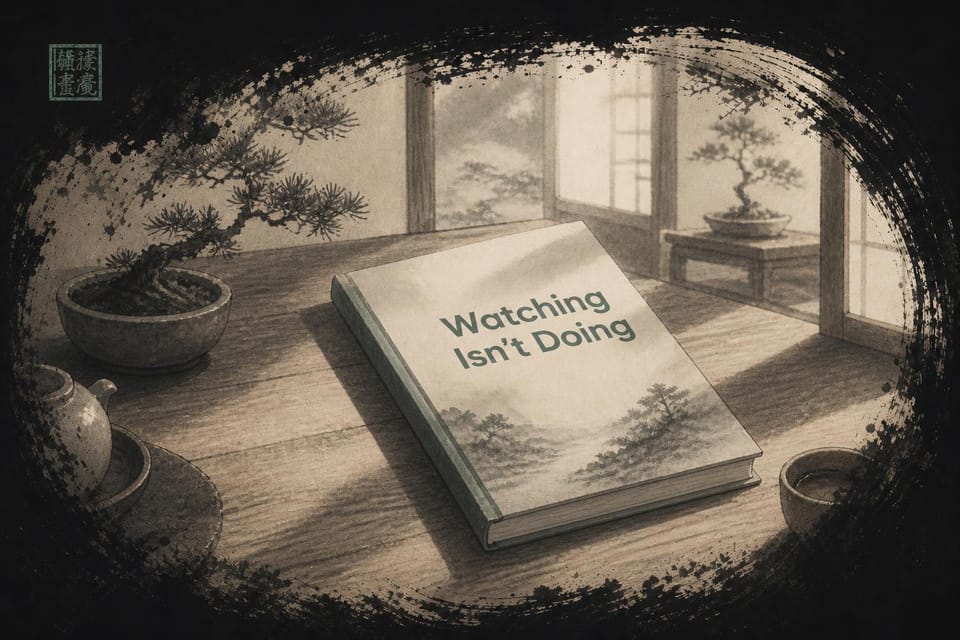
If you've watched a video of this practice — a stance held still, a slow qigong sequence, someone's weight dropping into a shape that looks both effortless and completely stable — there's a decent chance you've felt something in your own body while watching. Not just interest. Something closer to recognition, like your shoulders or spine registered the shape before you consciously noticed it.
That feeling is real. It's also not the same as being able to do it.
Why watching gets you partway there
Watching isn't nothing. Your nervous system does pick up real information from seeing a movement or a stance performed correctly — where the weight sits, how the shoulders stay down, the rhythm of a breath. This is a documented part of how humans learn physical skill, and it's a large part of why "watch the full video before you move" is the first instruction in every lesson in this course.
But watching builds a template. It doesn't build the specific proprioceptive feedback — the ongoing, real-time sense of where your own body is in space — that only shows up when you're the one holding the shape, and your own shoulders start climbing, or your own knee starts drifting off its line, and you have to notice and correct it yourself.
The specific gap
Here's the part that's easy to miss from the outside: the moment a video makes a stance look effortless is usually the moment the most is actually happening underneath. A person who's held a pillar for years makes small, constant, invisible adjustments to stay in structure rather than tension. None of that shows up on camera. What you're watching is the output, not the process — which means copying the shape you see is copying the answer without the part that makes it work.
That's not a reason not to start from video. It's the reason the method matters more than the demonstration: watch, then do it yourself, then step away from the video and try to rebuild the shape from what your body remembers, not what your eyes just saw.
What actually closes it
Three things, in order, every time:
Watch the whole thing once, without moving. Let your eyes and attention do the first pass. Notice the beginning, the end, and the two or three transitions that organise everything between them.
Do it with the video. This is where the gap starts closing — your own shoulders, your own weight, your own breath, in real time, guided but not yet independent.
Step away and rebuild it from memory. This is the part watching alone can never give you. If the shape falls apart, that's useful information — it tells you exactly which part hasn't transferred from watching to doing yet.
If you've been watching for a while
There's no penalty for having watched for months before trying anything. Recognition built from watching is real preparation, not wasted time. But at some point the only way past "I've seen this so many times" is standing up and finding out what your own body actually knows, versus what your eyes have just gotten used to seeing.
Start with the free lesson → the same watch-do-rebuild method, in a low-stakes place to feel the gap close for the first time.
 Medelian Twins


Member discussion