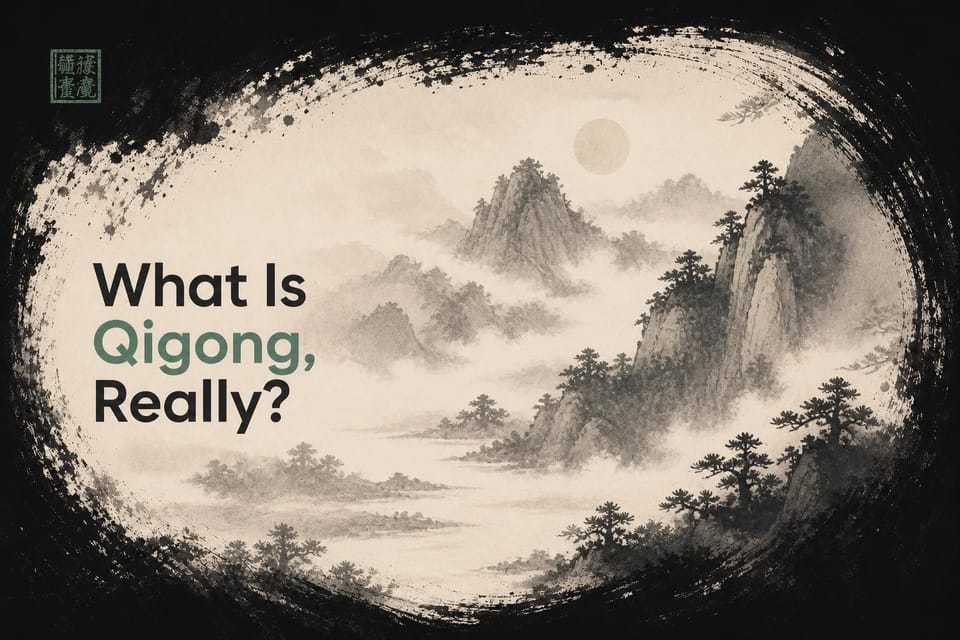
What Is Qigong, Really?
Qigong is often described as “energy work”, but this definition tells us very little.
In traditional Chinese practice, Qigong begins with the body. Before working with breath or intention, the body must develop the correct structural qualities. Only when the structure is aligned can breathing and internal work become meaningful.
Every movement in Qigong follows clear principles. The crown of the head extends upward, the shoulders sink naturally, the elbows hang downward, the lower back remains full, the tailbone is gently tucked under, the feet root into the ground, and the tongue lightly touches the palate to complete the internal connection. These qualities remain constant whether the movement is large or small.
For this reason, Qigong is not a collection of spontaneous or improvised movements. Although the practice may appear soft and flowing, every movement is carefully constructed. Each rotation, extension, shift of weight, and change of direction develops specific structural qualities that gradually reorganize the body into one connected system.
The Three Foundations of Qigong
Traditional Qigong training is built upon three complementary components.
1. Movement (Dao Yin)
Movement develops the body’s structure. Twisting, extending, opening, closing, rising, and sinking create elasticity in the joints, length in the tendons, and integration throughout the entire body.
2. Breathing (Tu Na)
Breathing coordinates with movement to regulate the body from within. In traditional terminology, this is described as “drawing in the pure and releasing the impure.” Breath is never forced—it naturally follows the structure and supports the movement.
3. Mental Intention (Jing Shen Gong)
The mind guides the practice. Visualization, awareness, and focused attention direct the movement internally. Depending on the exercise, this may include awareness of the lower Dantian, warmth developing within the abdomen, or the circulation of Qi through the body.
Only when movement, breathing, and intention work together does Qigong become a complete practice.
The Five Qigong Systems in This Course
Dry Washing (Dao Yin)
A traditional self-massage sequence that stimulates the body’s meridians and acupressure points. Through rubbing, pressing, tapping, and guiding the hands along the body’s pathways, it improves circulation, awakens sensitivity, and prepares the body for practice.
Ping An Qigong
A calm and balanced sequence focused on restoring alignment. Gentle rotations of the head, torso, and spine help release tension, mobilize the chest, and gradually open the body’s three major structural gates.
Silk-Reeling Qigong
This practice develops coordinated whole-body movement. Twisting and extending actions lengthen the tendons, mobilize the joints, and teach the body to move as one connected unit rather than through isolated muscular effort.
Opening the Three Gates
One of the core practices of the course. Through carefully coordinated rotations, extensions, and spiraling movements, the lower back, thoracic spine, and cervical spine gradually open and become integrated. As these three regions connect, the body’s structure becomes more stable, elastic, and efficient.
Heart Opening Qigong
Also known as Heart Nourishing Qigong, this sequence emphasizes the chest and upper back. Rotational movements, gentle shaking, heel drops, and opening exercises release tension around the thoracic spine, improve mobility of the rib cage, and create a greater sense of openness throughout the upper body.
Learn Through Practice
Qigong cannot be understood by theory alone.
The principles become clear only through repetition. What first appears to be a simple movement gradually reveals deeper layers of structure, breathing, coordination, and awareness.
Over time, these qualities stop being individual corrections and become a natural way for the body to move.
Begin with touch
The free lesson begins even more simply: with the hands on the body. Dry Washing is a guided Dao Yin self-massage from head to foot. No equipment. No need to memorise a form before you start.
 Medelian Dev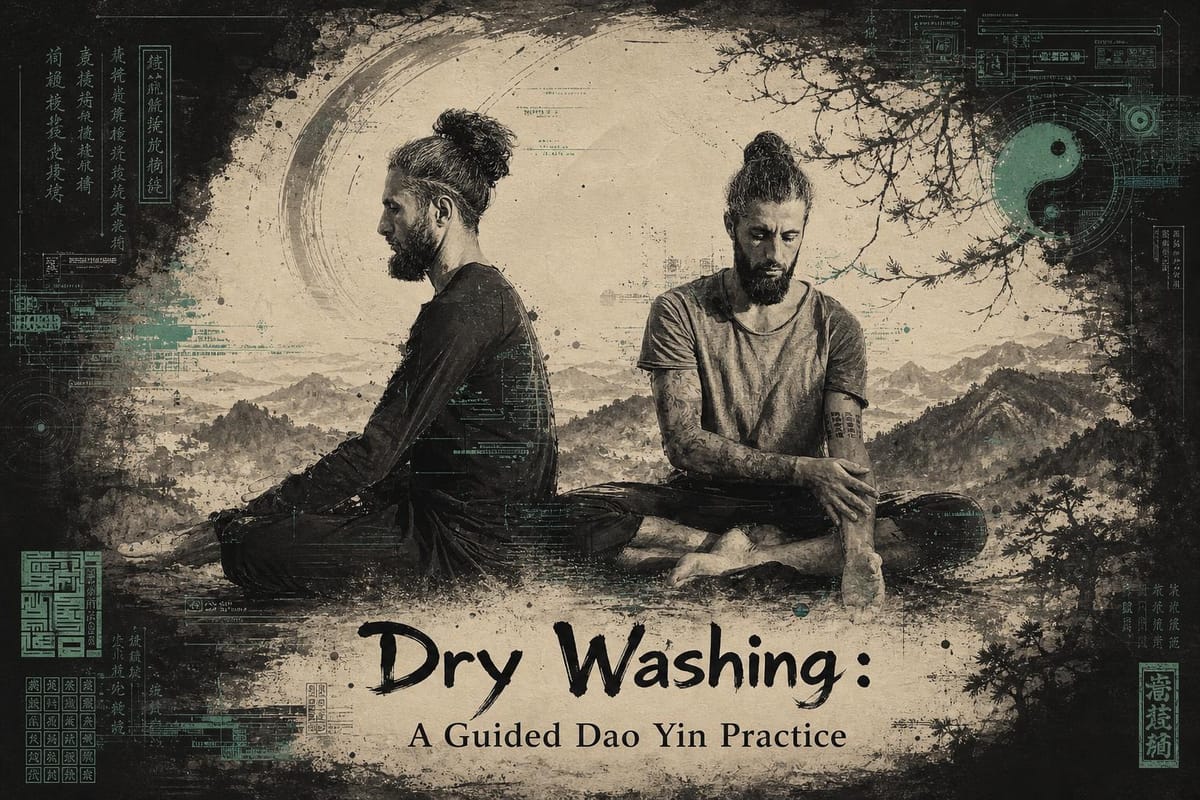

Member discussion