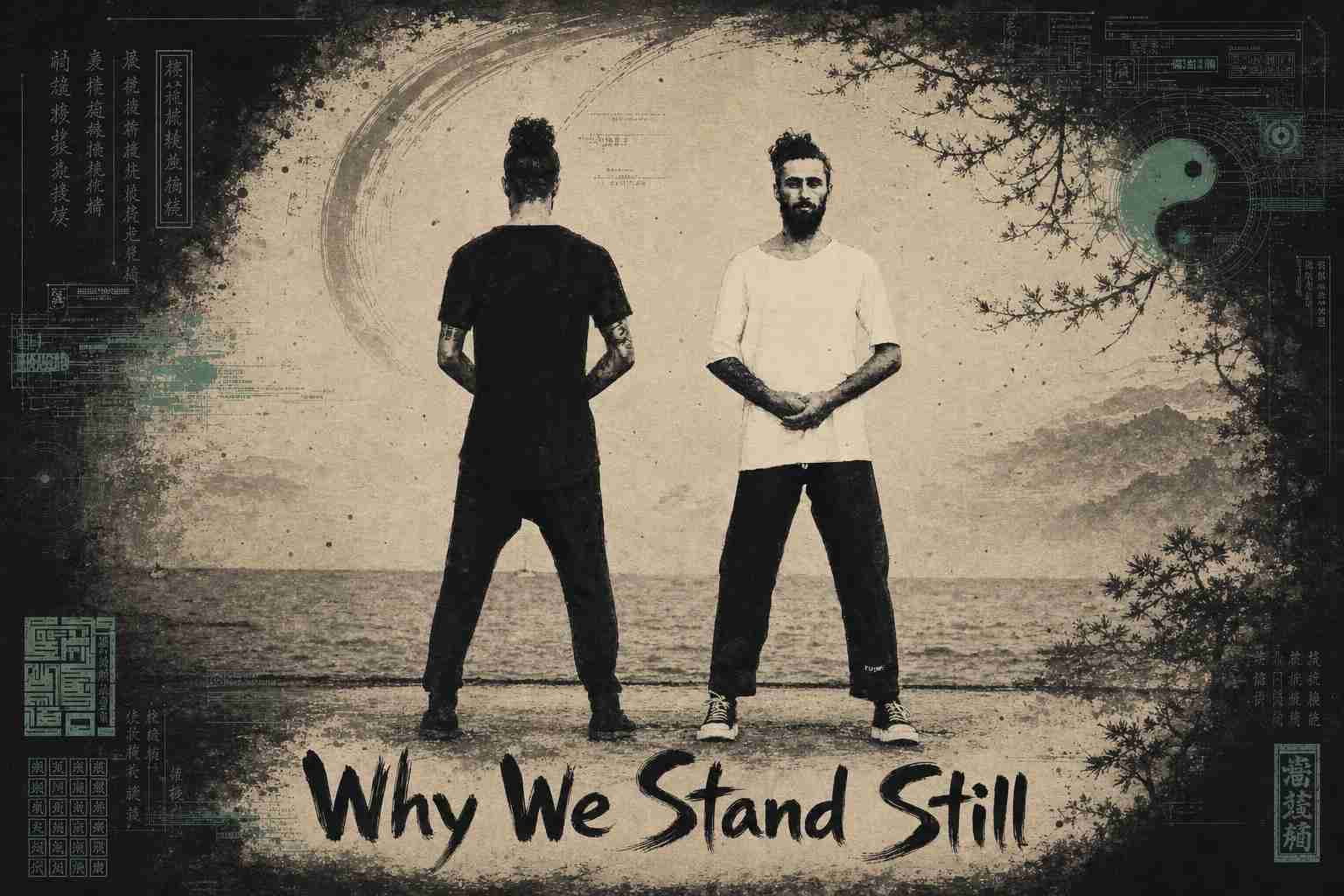
Why We Stand Still
At first, standing still feels like the easiest part.
Then the shoulders begin to rise. One knee takes more weight than the other. The lower back changes shape. The hands are still in the right place, but the body underneath them is no longer doing the same thing.
Stillness makes this visible.
A pillar is not a photograph
You can copy the outline of a stance and miss its structure completely.
In the first pillar, the legs are almost straight and the body is allowed to release. The crown continues upward while the shoulders settle towards the elbows. The form is quiet because the lesson is quiet: remove what is unnecessary before adding more work.
In the second pillar, three directions appear at once. The elbows expand outward. The heels of the palms settle downward. The hands maintain a forward direction. If one direction replaces the others, the stance changes even though the photograph may look similar.
Later pillars shift the weight, turn the feet, cross the legs, or balance on one leg. The outer shapes become more demanding, but the recurring questions remain:
- Where is the weight?
- What is reaching upward?
- What can stay relaxed?
- Where does pressure travel when the form is checked?
Tension is easy to create
When a position becomes difficult, the body often solves the problem by tightening everything. The shoulder lifts to support the arm. The lower back collapses or stiffens. The breath becomes small.
That may help you remain in the outline for longer. It does not mean the structure has improved.
The partner checks shown in the course are not contests of strength. They make direction visible. When someone presses on the arms, the question is not whether you can fight the pressure. The question is whether the whole stance receives it without one local area hardening and carrying everything.
How to practise a pillar
Watch the complete stance first. Then build it from the ground upward: feet, knees, pelvis and lower back, arms, crown, gaze. Step out. Build it again without the video.
Do not measure progress only by time. A shorter hold with a clear shape teaches more than staying longer after the shape has disappeared.
The point of standing still is not to prove that you can endure stillness. It is to notice what movement normally hides.

Member discussion